
Master Your Space
 Intdesco’s Definitive Guide to Interior Design Tips and Education
We’ve all been there: staring at a beautifully curated room on social media or in a magazine, and then looking at our own space with a mixture of hope and confusion. How do they do it? Why does that room feel so resolved, while mine feels like a collection of items? The gap between inspiration and execution can feel like an unbridgeable chasm.
At intdesco.com, we’ve dedicated our entire “Design Tips (How-To & Education)” collection to closing that gap. We don’t believe design is a natural talent reserved for a select few. It is a discipline—a language of scale, lighting, and texture that anyone can learn to speak. If you’ve ever felt overwhelmed by the infinite choices of furniture, colors, and layouts, this is your roadmap to design mastery.
1. The Critical Phase: Designing for the Algorithm (Your Own)
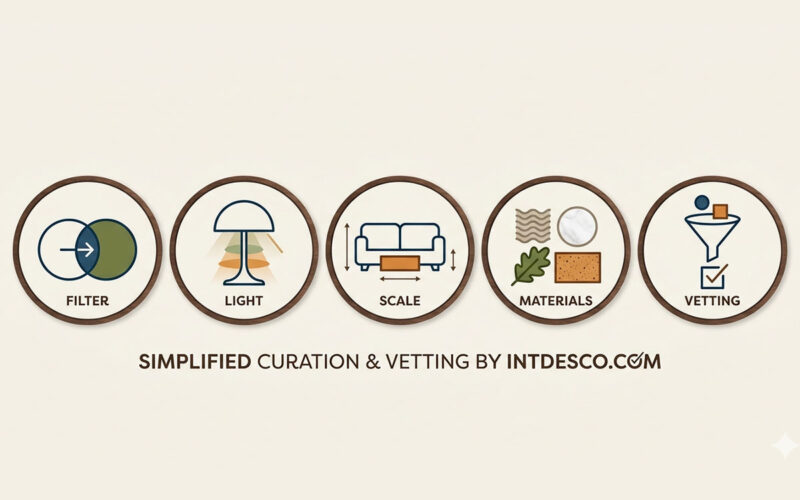
In 2026, the concept of a “design aesthetic” has evolved. We are no longer just choosing a “look”—we are selecting a lifestyle and filtering for it. Before you even think about buying a throw pillow, you need to understand how you “filter” your environment.
The Rise of Mood-Driven Design
A central pillar of modern design education is understanding how a room makes you feel. This isn’t just about color psychology (though that’s a part of it); it’s about affective ergonomics.
-
The Vibe Check: Are you designing a high-energy kitchen or a low-stimulus “Functional Cocoon” for deep relaxation? Your lighting, colors, and furniture silhouettes will be radically different for each.
-
The Intdesco Approach: Our Design Tips guides help you identify your primary mood driver and teach you how to translate that into specific design choices. For example, if you need a “grounded” environment, we might suggest exploring Warm Minimalism with its earthy textures, rather than a busy Textured Maximalist approach.
2. Lighting: The Architecture of Atmosphere
We say this a hundred times at intdesco.com: Lighting is not an afterthought; it is the design. It is the architectural element that defines every surface and color. Without proper lighting, even the most expensive Italian sofa will look like a mass-produced item.
Our core Lighting Design Tips emphasize the concept of “Layering”:
Master the Three Layers
-
Ambient Lighting: The “general wash” that fills the room, usually from a central fixture or recessed cans. Our Design Education resources teach you how to calculate the correct lumen output so the space feels vibrant, not clinical.
-
Task Lighting: Focused light for specific activities. In 2026, the hottest task lights are portable, battery-operated LED lamps (like the popular mushroom-style lamps) that let you add light wherever you need it without messy cords.
-
Accent Lighting: This is the gallery layer. It is used to highlight art, a unique architectural detail, or a prized sculpture. A key intdesco tip is using directional spots to create dramatic shadows—or chiaroscuro—which adds instant depth and perceived luxury.
3. Scale and Proportion: Playing the Game of Geometry
If there is one mistake that instantly betrays an “amateur” design, it is scale. When a rug is too small or a coffee table is too high, the entire room feels “vibrationally off”. Learning to see scale is the foundation of any design education.
Our how-to guides break this down into clear rules of thumb:
The Golden Ratio applied to your Room
-
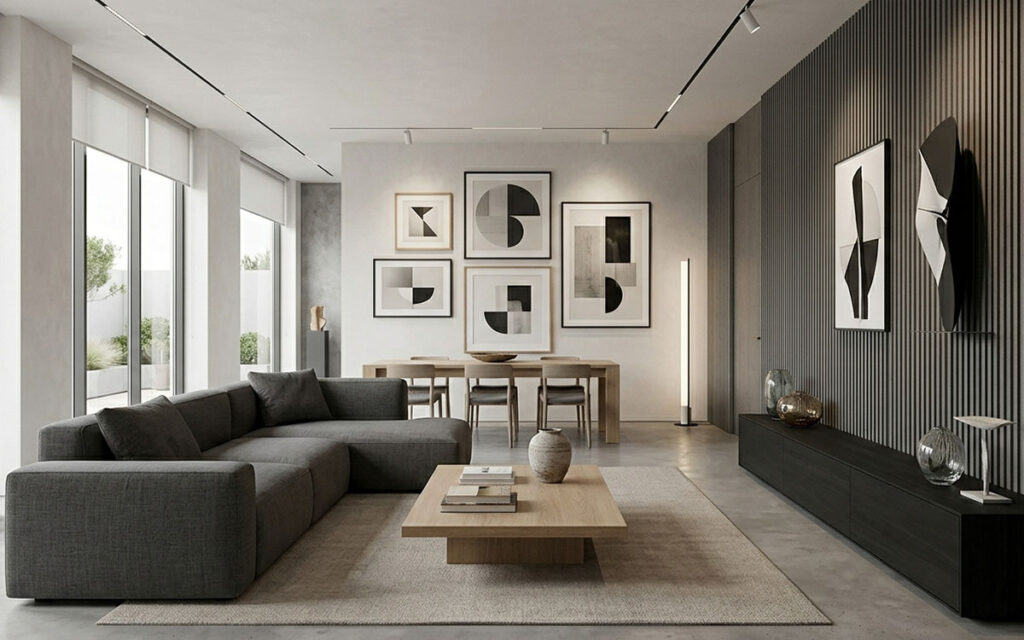
The Sofa Rule: Your sofa should be about two-thirds the width of the wall it is up against. Any smaller, and it gets “swallowed”; any larger, and it “crowds” the space.
-
The Rug Rule (Crucial!): A rug is meant to ground a conversation area, not act as a postage stamp. All of your major furniture pieces—the front legs of the sofa, the armchairs, and the coffee table—should sit on the rug. A small rug makes a room feel disjointed and temporary.
-
The Art Rule: If you have a large-scale sofa, your Anchor Print (as we discuss in our Art Gallery guides) should span about 60-70% of the sofa’s width to maintain visual balance.
4. Materials and Tactility: Designing for the Body
In 2026, luxury is no longer defined by a brand name; it is defined by integrity of material. A room’s story is told through the varied textures of its surfaces. If every surface is flat and smooth, the space will feel dead.
Our curated Textile and Material Guides provide the education you need to “shop for texture”:
Build Your Textural Layer
-
Start with the Anchors: If your main furniture (sofa, bed) is a textured fabric like bouclé or a slubby linen, use smooth, cool materials (a glass or marble table) to contrast it.
-
Contrast is Key: If you have a sleek, modern concrete floor, you must layer it with soft, organic textures like a sheepskin rug or a thick-pile wool carpet.
-
Biophilic Harmony: Don’t just add a plant; add the texture of nature. Woven jute, irregular rattan, and untrimmed cork are powerful, sustainable textures that ground a space.
5. Curation over Consumption: The Designer’s Eye
The final, and perhaps most important, design tip is this: A home is a collection, not a shopping list. The most beautiful rooms are not those that were bought in a day. They are spaces that have been layered with meaning over time.
The “One-In, One-Out” Philosophy
To maintain a high-level curation and prevent visual clutter (a core enemy of calm), we advocate for a refined Design Filter on all new acquisitions.
-
The Story Filter: Before a new sculpture or vase makes it onto your shelf, ask: What is its story? Does it complement your overall narrative?
-
The Longevity Vetting: We teach you how to spot quality. We prioritize pieces made with real materials (solid wood, genuine stone, cast metal) over plastic or resin imitations. A quality piece can be passed down and will only grow in character, whereas a trendy piece will feel “dated” in two seasons.
Final Thoughts: The Journey to your Masterpiece
Interior design is not about matching. It is about a complex, beautiful harmony. It is the intentional blend of light that softens the air, scale that grounds your gravity, and texture that engages your touch.
At intdesco.com, our entire “Design Tips (How-To & Education)” collection is built on the belief that a curated, intentional home is a powerful tool for wellness and self-expression. The principles we’ve outlined here—from mood-driven design to algorithmic ergonomics—are the tools you need to become your own curator.
Don’t wait for a professional to tell you your vision is valid. Start experimenting. Find your Golden Ratio. Harness your light. Master your space.


