
The Anchored Sanctuary
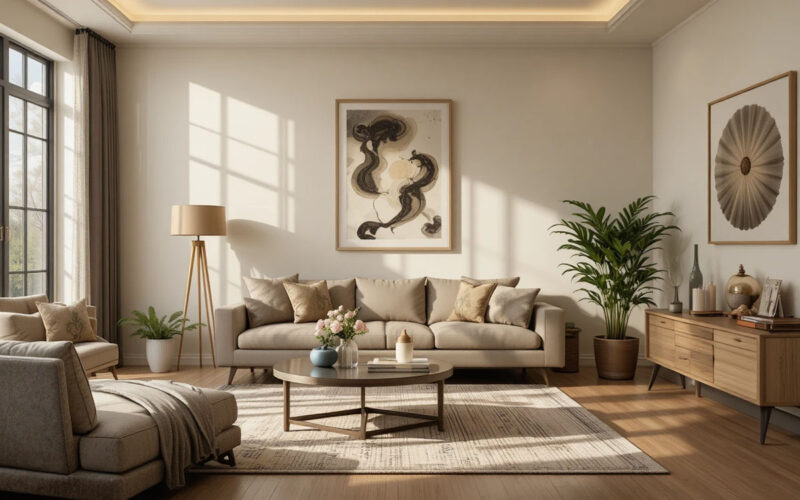
A Masterclass in Living Room Decoration and Curation
The living room is the gravitational center of the home. It is where our public personas soften into private relaxation and where our personal brand is most vividly on display to those we invite into our inner circle. In 2026, the philosophy of living room decoration has moved beyond the mere acquisition of furniture; it has entered the realm of intentional curation.
At intdesco.com, we believe that a living room shouldn’t just be “styled”—it should be sculpted. Every choice, from the wall color to the weight of a sculpture, serves a specific role in what we call affective ergonomics: the science of how a room makes you feel.
1. Defining the Aesthetic Algorithm
Before you place a single decoration item, you must identify the “theme” or soul of your space. Are you designing for high energy or a low-stimulus “Functional Cocoon”?
Warm Minimalism
This theme is a staple for those seeking deep relaxation. It relies on grounded, earthy tones like terracotta, sage, and sand. The key here is tactile honesty—using materials like solid oak, matte ceramics, and high-pile wool rugs to ensure the space feels “warm” rather than clinical.
Modern Heritage
For a living room that feels collected over time rather than bought in an afternoon, the Modern Heritage approach is unrivaled. This theme bridges the gap between old-world craftsmanship and modern living. It thrives on contrast: placing an ornate gold frame next to a sleek, smart-integrated LED lamp.
2. Sculptural Objects: The Third Dimension
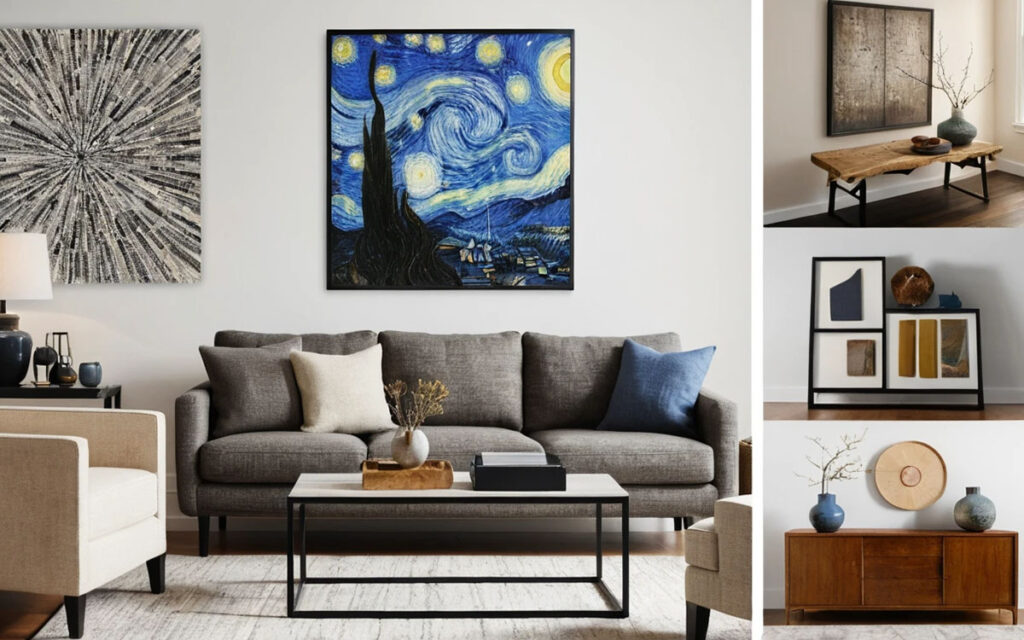
One of the most significant shifts in modern living room decoration is the rise of the sculptural object. We no longer view decoration as just “filling space”; we use 3D forms to create a visual narrative.
-
The Hero Piece: Every living room needs an anchor—a sculpture or art piece with enough gravity to ground the room’s energy.
-
Silhouette and Contrast: In a room dominated by the straight lines of sofas and bookshelves, organic, curved sculptures provide a necessary visual “break”.
-
Material Integrity: Luxury is defined by authenticity. We prioritize solid walnut, genuine stone, and cast metals over resin or plastic imitations.
3. The Architecture of Light and Atmosphere
Lighting is not an afterthought; it is the decoration. It defines every surface and color in your living room.
-
Layering: A professional living room uses three layers: Ambient (general wash), Task (focused light), and Accent (the gallery layer).
-
Chiaroscuro: Use directional spotlights to create a dramatic play between light and shadow. This adds depth and perceived value to your sculptural items and textured walls.
-
Artful Fixtures: In 2026, the light fixture itself is a decoration item. Portable, battery-operated LED lamps allow you to add pools of light to bookshelves without messy cords.
4. Scale, Proportion, and Geometry
The most common “amateur” mistake in living room decoration is a failure of scale. If a rug is too small, the room feels disjointed; if the art is too small, the wall feels “empty”.
-
The Rug Rule: A rug must ground the conversation area. All major furniture legs—sofa, armchairs, and coffee table—should sit on the rug to create a unified zone.
-
The Golden Ratio for Art: Your primary wall art should span roughly 60–70% of the width of your sofa to maintain a sense of geometric balance.
-
The Sofa Rule: Your sofa should ideally be about two-thirds the width of the wall it sits against to avoid crowding the space or getting “swallowed”.
5. Biophilic Integration: The Living Layer
No living room is complete without a living element. Plants are dynamic decorations that grow and change, adding organic energy to your curated palette.
-
Living Statues: Large-scale plants like an olive tree or a fiddle leaf fig act as living sculptures.
-
Natural Vessels: The pot is just as important as the plant. A weathered terracotta pot adds a “heritage” feel, while matte ceramic planters support a minimalist aesthetic.
-
Organic Accents: Incorporate textures like woven jute, raw rattan, and river stones to bring the outdoors inside.
The Curation Filter: How to Choose
At intdesco.com, we advocate for a “Buy Once, Love Forever” philosophy. Before adding a new decoration item to your living room, pass it through our veting process:
-
Material Vetting: Is it made of honest, real materials (wood, stone, metal)?
-
Aesthetic Harmony: Does it complement your design story (e.g., Warm Minimalism or Modern Heritage)?
-
The Soul Test: Does the object evoke an emotion or represent a memory?
Final Thoughts: The Art of the Edit
The final step in decorating a living room is the edit. A true curator knows when to stop. Give your sculptural objects and furniture room to breathe. Use “white space” on your shelves to ensure that the pieces you do choose can truly shine.
Your living room is an evolving exhibition of your life. By focusing on quality, scale, and light, you aren’t just decorating a house—you are sculpting an environment that inspires, grounds, and represents the very best version of yourself.


